Project Overview
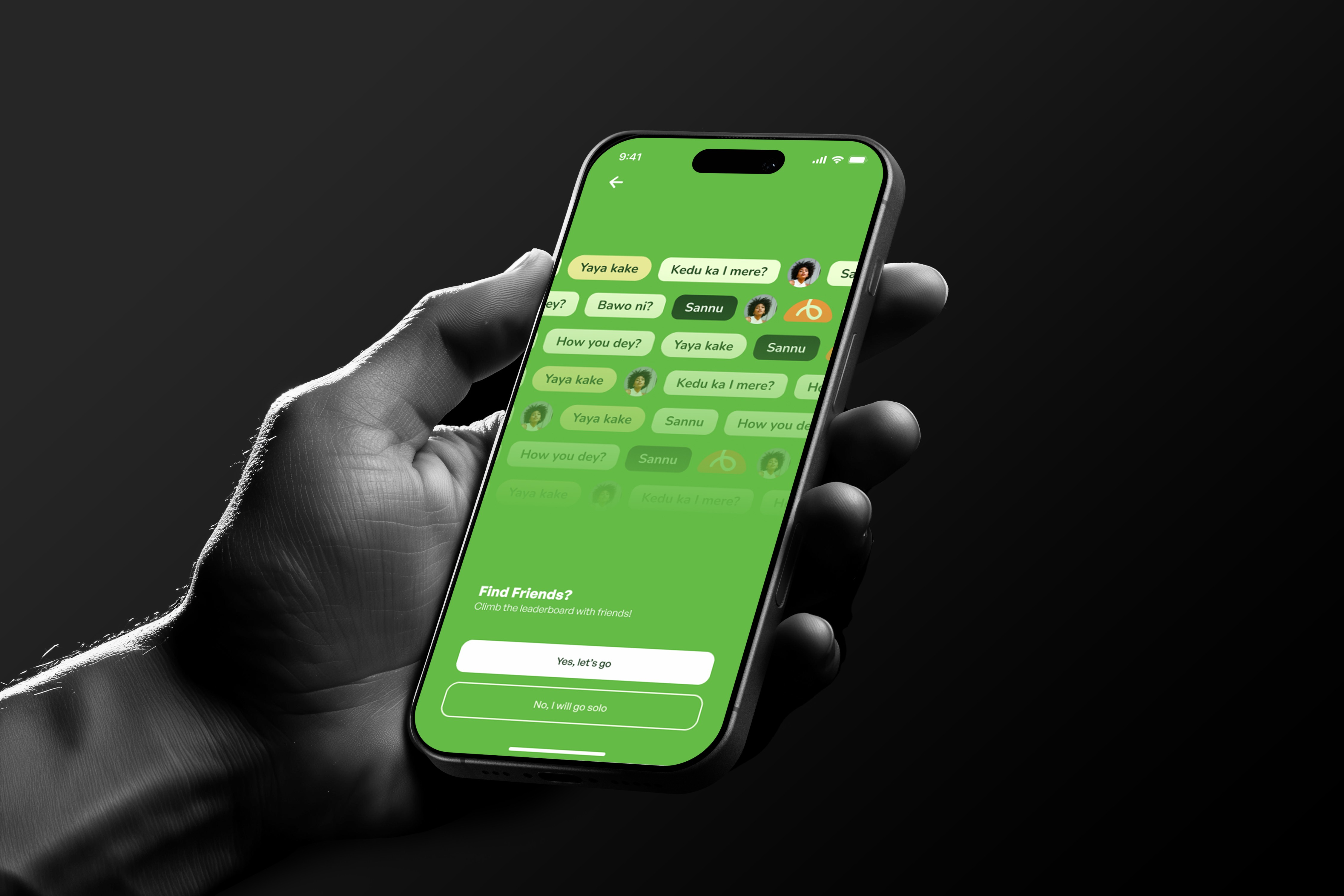
Talkadoo began as more than just an app idea it was a cultural mission. In an increasingly globalized, tech-driven world, many young Nigerians were growing up with little knowledge of their indigenous languages. Whether due to westernized schooling, urban migration, or lack of formal learning systems, our native tongues from Yoruba to Igbo to Hausa and beyond were quietly slipping into the background. I joined the project as the Lead UI/UX Designer, tasked with bringing to life a language-learning app that wasn’t just functional, but vibrant, playful, and proudly Nigerian. This wasn’t going to be Duolingo in a wrapper. Talkadoo needed to speak the language of its users literally and culturally while making learning feel like play. The team consisted of a cultural researcher, two developers, a gamification consultant, and myself. Together, we set out to build an app that didn’t just teach Nigerian languages it celebrated them.
The Problem

For many Nigerians, the idea of learning local languages was tied either to rigid, academic structures (like dusty textbooks and blackboard drills) or to informal family settings both of which often lacked consistency or motivation. Tourists who visited Nigeria wanted to learn quick phrases to navigate and connect. Parents wanted their children to pick up their mother tongues. Adults wanted to reclaim languages they had forgotten over time. But the options available were clunky, uninspiring, or non-existent. We realized early on that the challenge wasn’t just about access it was about presentation. People didn’t need more flashcards or passive vocabulary lists. They needed a learning experience that was alive full of sound, repetition, rewards, and even laughter. That’s where Talkadoo found its voice.
Research & Discovery
To build something that truly resonated, I dove deep into the intersections of language, memory, and digital behavior. We interviewed Nigerians from different regions, asking them how they learned their mother tongue (if at all), what made it difficult, and what they wished they had. What we heard was consistent. Most people wanted to learn but didn’t know where to start. They were ashamed of not knowing their language or frustrated with how quickly they forgot what they had once known. They didn’t want a school they wanted a playground.
We also observed behavior from users of gamified learning apps like Duolingo, Drops, and Memrise. What they had in common was not just a curriculum they had stimulation, celebration, and feedback loops. But none of them supported indigenous African languages in any meaningful way. Talkadoo had the chance to become the first of its kind a fun-first, culturally rich language learning product made specifically for Nigeria and Africans by Nigerians.
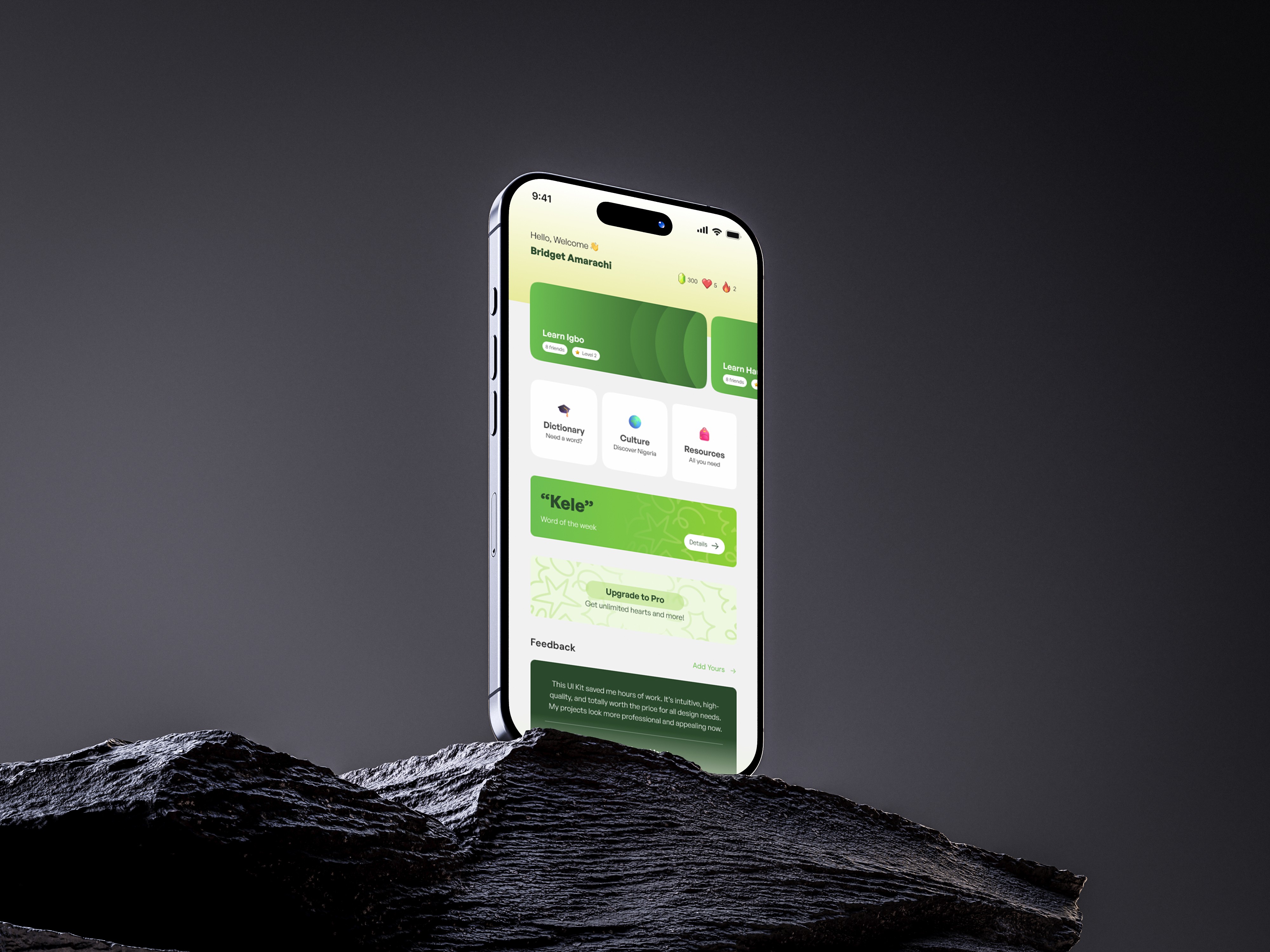
Strategy
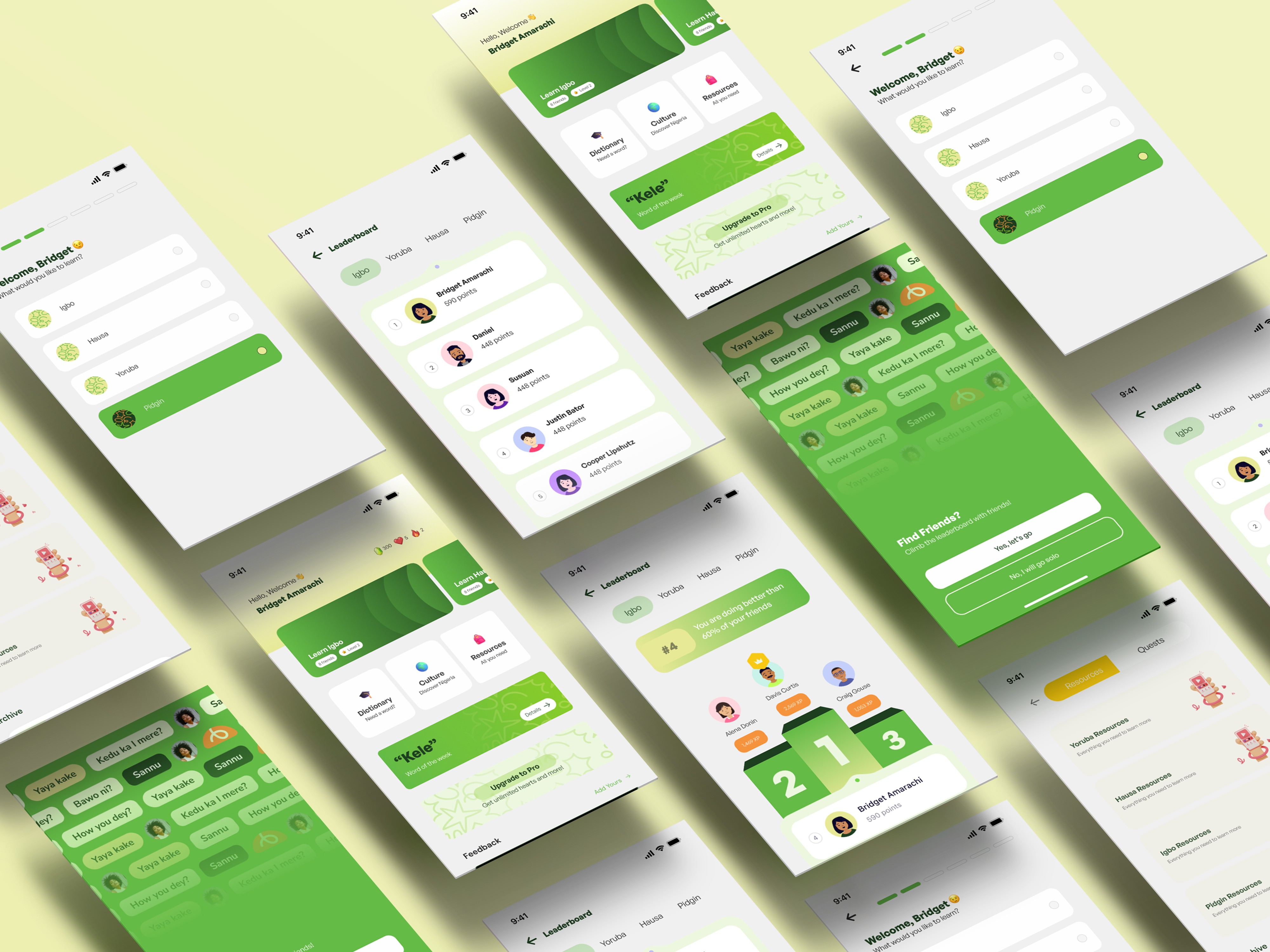
Our north star was simple: make people feel proud and excited to learn their language. That meant prioritizing emotion, play, and rhythm over formality. Every screen needed to invite curiosity. Every interaction needed to be rewarding. Every moment inside the app had to say “this is yours own it. We used voice, audio, repetition, and games to build memory and confidence. Rather than focusing on grammar drills, we leaned into everyday phrases, cultural slang, tonal pronunciation, and relatable context. It was less about passing a test and more about using the language in real, social ways. I focused on creating a UI that was expressive not minimal. Colors were inspired by traditional fabric patterns. Icons were hand-illustrated with a touch of imperfection to feel warm and approachable. Characters had local hairstyles, outfits, and facial expressions. This wasn’t just learning. It was cultural immersion through design.
I started by designing user journeys for our three main personas: the Nigerian adult trying to reconnect, the parent introducing a child to their roots, and the tourist exploring for the first time. These journeys helped me define onboarding flows that were welcoming, non-judgmental, and motivating from the first tap.
We built lesson flows that started with audio prompts, repeated with visual reinforcement, and ended with short games. The gamification elements were layered not in-your-face, but consistent. Users earned proverbs, badges with cultural references, and even audio trophies.
Impact
Conclusion
Building Talkadoo was collaborative in the truest sense. I worked with cultural researchers to ensure that idioms and pronunciations were accurate. We collaborated with voice actors from different regions to give the audio personality and authenticity. I also worked closely with the dev team to balance performance with animation-heavy interactions making sure the app worked well even on lower-end Android devices, which made up a significant part of our user base. Talkadoo reminded me that design is not just about screens it’s about identity. We weren’t just building a product. We were restoring a sense of belonging, one word at a time. In a space where indigenous languages are often overlooked or over-simplified, we created something playful, purposeful, and proudly local.
Product Design
UX Design
Figma